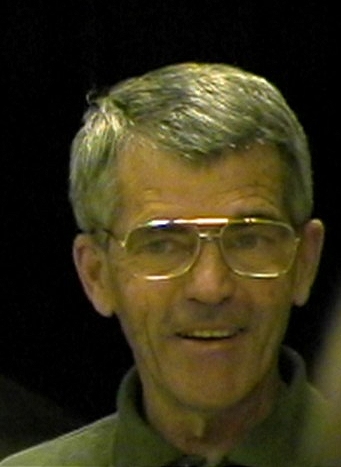
 Bruce Bayer, PO Box 960, 7579 Kuilsriver.
I often wonder why I have written and still continue to write about Haworthia. The plants have had a special fascination for me since childhood, but it is not that I really enjoy these plants more than I do many others. The interest for me lay in the problem of identification and naming and I was continually asking where a particular plant seen illustrated or growing came from and what was it and why did the names seem to differ. As an entomologist I came to question all these names and their meaning, and to wonder about the classification. After all, it is the names that we use as individuals or as groups of people to grow, collect and communicate about the plants we interest us. So classification and names are just as basic and fundamental to us as a group of hobbyists as they are to botanists pursuing academic and intellectual truths. The history of Haworthia was clouded with conflict before I started writing and the pattern has continued despite what history should have taught us. I have personally made my best effort to generate a stable and sensible set of names for a community that I would like to be part of. This community I wanted to encompass was that of the ordinary collector, the more dedicated collector, the horticulturist, the commercial grower, herbarium and field botanists, and conservationists.
It has been immensely frustrating to see my ideal so thwarted and to find it so difficult to communicate what I consider to be simple ideas to all the sectors of the community I want to share with. Now at the closing of my life and what career there has been in Haworthia I feel the need to make some final effort. A motivating factor has been the recent publication in the German journal Avonia, of twelve new species and varieties of Haworthia by Ingo Breuer. If I ask what significance this has for the community I perceive out there, I cannot answer the question except to suggest that it may be the commercial value. I cannot see any other sense in it. The field collection has been done by South Africans who are not accredited by Nature Conservation to do the collecting, neither by any institution that supports their activities as far as I have been able to establish. Is it a product of bona fide research and does it justify the tacit support given by individual botanists who are involved in the writing of forewords and introductions? Regarding the classification involved, I throw up my hands in despair because none of these new taxa suggest to me the taxonomic significance that the descriptions or the describer may attach to them. It is quite probable that the collectors have some individual motivation and are not working through local institutions that could thwart their private goals.
Few members of my imaginary community seem to share my concerns. As a writer, editors are the main vehicles for publication and I have expected them to function as a filter to separate the reasonable from the unreasonable. The kind of reaction I receive from them is that everyone is entitled to an opinion and that the reader can make what he/she wills of any classification put before him or her. An editor has also said to me ?I think the “problem” is that most people who like plants that I am addressing with the Journal are just hobbyists. Some are more serious than others. They want a good name, pretty plants, field trip notes, good books to pore over, but not necessarily devour. They don’t want to be confused, to the contrary, most want a hard and fast true answer… as if there is only one or ever will be?. However, I cannot agree. My conclusion from so many years of frustration and intellectual isolation, is that the problems lies in how we have all been led to regard botanical names and their meaning. Readers are already confused and editors are co-responsible. This is what I would like to address in this article.
After describing Haworthia limifolia var gigantea in 1962, I wrote ?Haworthia as a problem genus? in 1970 and that article was published in this Journal. In effect what I said then was that there would never be order unless the species were to be seen as morphologically and geographically distinct entities. I also said that new species and varieties were not discussed adequately in terms of distribution or variability. Among my comments was it would take detailed and intensive coverage of the area before a sample could be taken as representative.
Since I wrote that article there has been a vast volume of water under the bridge and many new writers have come and gone or are still busy gnawing away at the carcase. The taxonomic situation in Haworthia is as confused now as it was in 1970 and before. Why? I think the answer is simple, and sadly so. The roots of taxonomy are in a foundation of shifting sand because a botanical name does not mean the same thing to everyone. As one editor put so succinctly…? There is no doubt that SPECIES should have a meaning, preferably one that is universally accepted so that everyone is on the same level?. Albeit that this conclusion was only reached after a long struggle to get this editor to distinguish between a species description and the definition of the word ?species?.
This is a point that I have been struggling to make for a long time and it has amazed me that botanists talk about different kinds of species, biological species, phylogenetic species, chemical species and many more kinds of kinds. The word ?species? has always meant to me ?life-form?. Most people will agree that it is the basic unit of biology and yet there is this curious and incongruous use of the phrase ?biological species? which suggests that there are species that are not of biology. Can one progress through a university curriculum and postgraduate study to a doctorate and still have no idea of what a species is or might be? My observation is that this is fact.
If botanists have not been able to establish a definition and agree on species definition, it is patently obvious that we have all the ingredients for an unholy mess. If there be any doubt about this, I would refer readers to all the literature on Haworthia, including my own. One botanist remarked that I was being silly insisting on a definition when the subject was one of continuous debate! Classification is largely a non-science. It is simply a descriptive activity ensconced in a web of legislative rules, articles and recommendations of a formal nomenclatural code. Anybody can become and be fully accepted as a taxonomist with absolutely no credentials, on the presentation of a description, a latin synopsis and the citation of a type. If in addition they can quote the clauses and articles of the International Code and throw in some latin phrases here and there, their stature is elevated. There is a whole field of literature which deals purely with the technicalities of the code and has no relation whatsoever to the plant species for which it was fabricated. It is a vast playing field. The tragedy is that there is no protection for the passive observer or interested party who should feel secure in the knowledge that there is logic and reason in the whole process of naming and communicating about plants.
Currently there are two trends in present time to remedy this unfortunate situation. Both are aimed at taking the subject to abstruse intellectual heights that will positively close the door and make it impossible for the uninitiated to participate. The one trend is to rely on the so-called science of cladistics and the other is to enter the realm of the sub-microscopic and analyze the genetic material on which the (still undefined) species rest. Neither trend is to address the underlying problem.
In my opinion cladistics should be seen clearly for what it is. It is multivariate analysis where character states are chosen and modified as subjectively as in conventional methodology to produce a two-dimensional ?tree?. This tree is presumed to be the representation of the evolutionary processes in the plants being discussed. This is the element of time. But in this model the element of space (the branch ends) is restricted to one dimension. DNA methodology is primarily based on examining the sequence of nucleotide bases (amino acids) on a piece of the total protein strands that constitute the chromosomes or cellular protein that drives genetics. It is said that these amino-acid sites represent characters and thus looking at say 1000 sites (?characters?) is immensely superior to the guesses we make when we look at say flower colour or bract shape which we could choose to identify a ?species?. The argument loses sight of the fact that these 1000 sites on a single gene sequence are but a fraction of the genome DNA (Sahtouris writes that the genes probably account for less than 1,5% of any single genome), whereas flower colour or bract shape may be the end-products of the interaction of many genes or of the entire genome. The end model is also only the same two-dimensional one of cladistics.
I have suggested that species follow a pattern that many natural systems do. My suggestion is that species are fractal. This means that they possess or exhibit variability that cannot be explained or plotted in linear or smooth curvilinear fashion. But I also define the word ?species? ? a dynamic system of living organisms in a group or groups of individuals that are morphologically, genetically and behaviorally continuous in space and time. This definition is not proposed as a fairy wand as one critic suggested. It is anything but. It does not make taxonomic decisions easier. It means that there is now a definition and standard in place against which one can question and evaluate species descriptions and taxonomic decisions. We have to see individual plants as members of systems and act on the fact that a name tied to a single dead herbarium specimen is less important than the meaning of the name referring to living forms. More incisively then, it makes it incumbent on the taxonomists to view species as systems in a greater whole of biology. There is a still greater objective and that is to see species as these life forms that give meaning to a creation science otherwise demands that we examine only mechanistically. It would mean that the classification process could be placed back on a proper scientific foundation and exclude individuals who pursue new names for atavistic pleasure, for egocentric and commercial goals, or for particular communities.
My experience has not been limited to Haworthia. I have to say this because inevitably when I meet another taxonomist the attitude is assumed that I am working in a strange and unique field. Also, condescendingly, that I am grubbing around in my own tiny space quite ignorant of the deep thoughts and knowledge of the inner sanctums of science. Generally the genus Haworthia is seen to be taxonomically intractable and largely so simply because it fascinates amateur collectors (and amateur taxonomists). I wish I could demolish this myth for once and for all. It is only intractable because botanists have been so self-satisfied and mollycoddled by lack of peer review in their backroom havens of herbaria that they have seldom really had to face the realities of natural variation. They have worked secure in the knowledge that there is no definition and that under these circumstances one opinion is a good as another. In the general forum of human behavior, someone who comes in from outside with a plucked flower in the hand is almost seen as demonstrating an above natural interest in flora and a flair for botany. With a bit of early encouragement the individual could presumably have been a great botanist. Haworthia is difficult perhaps because it is so well collected and so widely grown.
For a journal editor to say that readers are not interested in the problems of nomenclature and do not want to be confused is a denial and renunciation of responsibility. It is to say that readers are asleep and they should not be awakened; that they have been educated to an untruth and they should be left there. Furthermore, this is any case what we feed them and we have a vested interest in maintaining untruth. There is no general close interest in plants that extends to proper nomenclature. Very few people in the vast mass of society actually have a latin binomial anywhere in their vocabulary. As an oddball who has grown up and lived with such names it has been a constant war to have them seen as keys to knowledge. Instead of respecting this fact, it is common for people to proudly deny knowing the scientific proper names for living things.
Classification and nomenclature has become a laughing stock in society and a subject to be avoided. Unfortunately someone has to take it seriously and give it meaning. I have tried to do this for Haworthia for sincere and honest people who deserve better than the untruth and misinformation that is laid before them on a daily basis. My community has dwindled away to nothing. Where I was myself a lost sheep, I now feel like a shepherd with no flock!
May I say that as a young enthusiastic amateur horticulturist the work of Mr. Bayer has had a significant influence on the way I look at the plant world. I have worked in a local nursery that specializes in Cactus and Succulents for a year now, and I have used his writings to I.D. and correct many misidentified plants. The efforts put forth by Mr Bayer in giving direction and focus to the understanding of Haworthias should be greatly appreciated. Cheers to Bruce Bayer!